
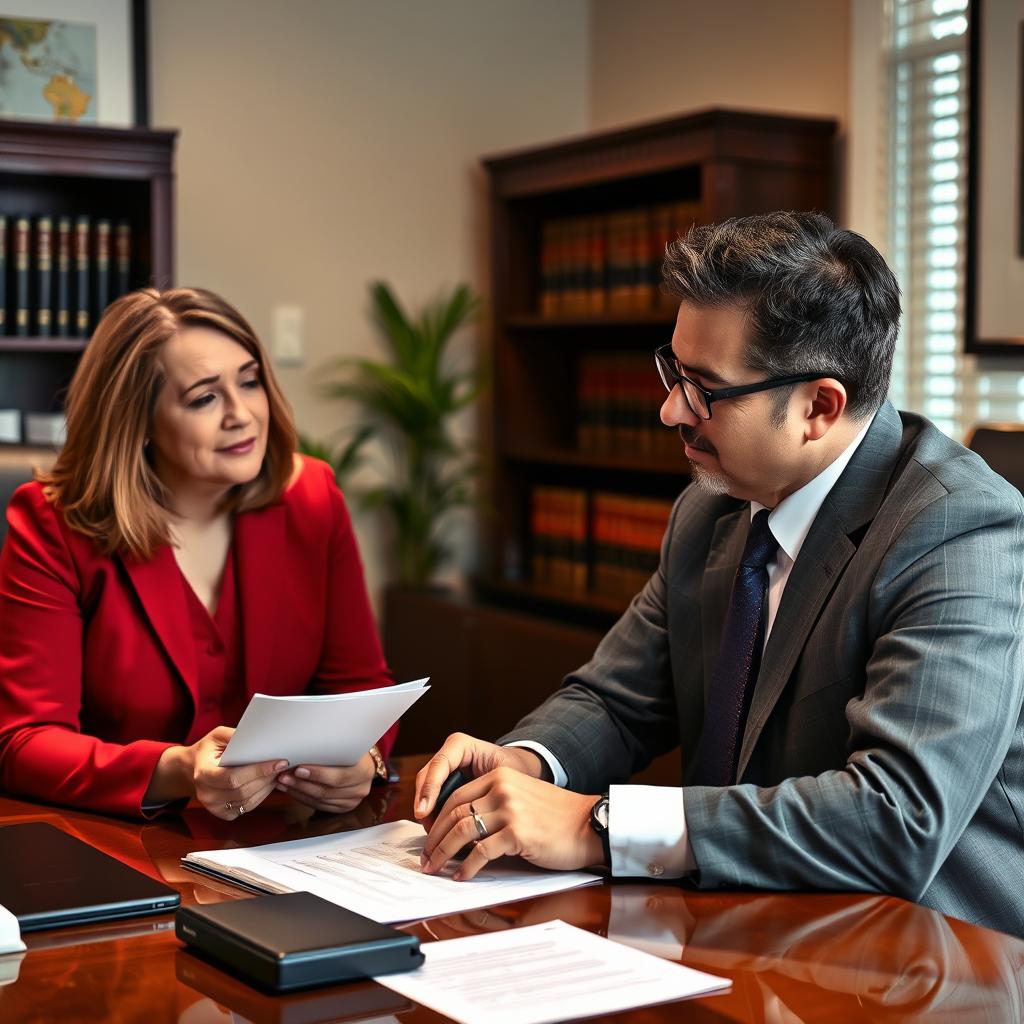
Shoplifting Lawyer Forest Hills, DC
Facing a shoplifting allegation in Forest Hills can be unsettling. Shoplifting is a theft offense under D.C. Law, and the United States Attorney’s Office for the District of Columbia prosecutes these matters at the D.C. Superior Court. Whether you are a student, a professional, or a longtime resident of Forest Hills, a conviction can bring jail time, fines, and a lasting criminal record. Mr. Sris and his Of Counsel team at Law Offices Of SRIS, P.C. bring extensive combined legal experience to defending clients against shoplifting charges in Forest Hills and throughout the District of Columbia. Results may vary. For a consultation, call (888) 437-7747.
What Shoplifting Means in Forest Hills, DC
In the District of Columbia, shoplifting is prosecuted as theft under the D.C. Code. The severity of the charge depends on the value of the property allegedly taken. Theft in the second degree (property valued at under $1,000) is a misdemeanor carrying a maximum penalty of 180 days in jail and a fine. Theft in the first degree (over $1,000) is a felony punishable by up to 10 years in prison. Most shoplifting cases involve second-degree theft, but the classification can escalate where the value or circumstances place the charge in the first-degree category. A conviction may also have long-term consequences beyond the courtroom, including impacts on employment, professional licensing, and immigration status for non-citizens.
All criminal cases arising in the Forest Hills neighborhood are heard at the D.C. Superior Court, located at 500 Indiana Avenue NW, Washington, DC, near the Judiciary Square Metro station. The court is within reasonable reach of Forest Hills, Van Ness, and Chevy Chase DC. Because D.C. Is a federal district, local crimes are prosecuted not by a district attorney’s office but by the United States Attorney’s Office for D.C. (USAO-DC). This federal/local hybrid system means that prosecutors bring substantial resources to shoplifting cases. Additionally, D.C. Does not use a traditional cash bail system. Instead, the Pretrial Services Agency (PSA) conducts a risk assessment and recommends release conditions to the court. Most defendants are released on personal recognizance or with minimal conditions. Understanding the PSA process and the USAO-DC’s posture toward retail-theft prosecutions requires counsel with specific D.C. Courtroom experience.
Our Arlington location serves clients from Forest Hills and all D.C. Neighborhoods. Mr. Sris and his Of Counsel appear regularly in D.C. Superior Court and are well-versed in the procedural and substantive aspects of theft prosecutions under D.C. Law.
How Mr. Sris and His Of Counsel Handle Shoplifting Cases
When a client contacts us about a shoplifting charge in Forest Hills, we begin with a careful review of the evidence. Shoplifting cases often depend on store surveillance video, employee statements, and loss-prevention reports. We examine whether store personnel followed proper procedures, whether the identification of the accused was reliable, and whether the property’s value was accurately documented. Weaknesses in the prosecution’s case are the foundation of a strong defense. Mr. Sris, a former prosecutor, understands how the USAO-DC builds shoplifting cases, and he and his Of Counsel use that insight to challenge the government’s evidence at every stage.
Early intervention can be critical. In D.C., a shofting charge may be resolved through diversion programs, deferred sentencing agreements, or negotiated pleas that reduce the charge from a felony to a misdemeanor or even result in outright dismissal. For a first offense, prosecutors may be willing to consider alternatives that avoid a conviction. Where the facts support it, we press for dismissal at the earliest opportunity. If trial is necessary, our team prepares thoroughly, challenging witness credibility, chain-of-custody issues, and the sufficiency of the evidence. Throughout the process, we also advise clients on collateral concerns such as employment, security clearances, and immigration consequences. We work to achieve the most favorable outcome possible given the specific facts of each matter.
About Mr. Sris and His Of Counsel Team
Mr. Sris, Owner and Founder of Law Offices Of SRIS, P.C., has practiced law since 1997. A former prosecutor, he brings firsthand knowledge of how the government approaches criminal cases to the defense of every client. He is admitted to practice in Virginia, Maryland, the District of Columbia, New Jersey, and New York. Mr. Sris testified before the Virginia House Courts of Justice Committee in support of 2019 HB 635 (chief patron Del. David Bulova). His multi-state experience and familiarity with D.C.’s unique prosecution system benefit clients facing shoplifting allegations in Forest Hills.
The firm’s Of Counsel bring extensive combined experience in criminal defense. The team includes attorneys who have practiced in D.C. Superior Court for decades, handling everything from misdemeanor theft to complex felonies. Several have backgrounds that include death-penalty certification (prior to its abolition in Virginia), contracting with government agencies on abuse and neglect cases, and deep trial work involving scientific and technical evidence. For a shoplifting charge, this depth of experience ensures that every evidentiary angle is explored and that the client’s interests are protected at each step. From initial appearance to possible record sealing after the case is resolved, Mr. Sris and his Of Counsel provide focused, thorough representation.
Frequently Asked Questions
What is shoplifting under DC law?
Shoplifting in the District of Columbia is prosecuted as a theft offense under the D.C. Code, with penalties based on the value of the property taken. Theft of property valued under $1,000 is a misdemeanor, punishable by up to 180 days in jail. Theft of property valued at $1,000 or more is a felony and carries a maximum sentence of up to 10 years in prison. The charging document will specify whether the offense is charged as second-degree or first-degree theft. Even a misdemeanor conviction creates a criminal record that can affect employment, housing, and professional licensing.
Who prosecutes a shoplifting case in D.C.?
Shoplifting cases in the District of Columbia are prosecuted by the United States Attorney’s Office for D.C. (USAO-DC), not a local district attorney. Because D.C. Is a federal district, the U.S. Attorney serves as the local prosecutor for violations of the D.C. Code. All shoplifting cases are heard at the D.C. Superior Court, located at 500 Indiana Avenue NW. The USAO-DC brings substantial resources to theft prosecutions, which makes experienced defense counsel important from the outset.
Does D.C. Have cash bail for shoplifting charges?
No. D.C. Does not use a traditional cash bail system. Instead, the Pretrial Services Agency (PSA), a federal agency, evaluates each defendant and makes a release recommendation to the court. Most individuals charged with shoplifting are released on personal recognizance or with minimal non-monetary conditions. The PSA assessment focuses on community ties, prior court appearances, and the nature of the charge. A lawyer can help present relevant information to the court at the initial appearance to support release on the least restrictive conditions.
Can a shoplifting charge be expunged or sealed in D.C.?
Yes, D.C. Law allows for the sealing of certain criminal records, including shoplifting charges, under D.C. Code § 16-803. Eligibility depends on the disposition of the case. Acquittals, dismissals, and certain convictions may be sealed after waiting periods. For example, a misdemeanor theft conviction may become eligible for sealing several years after completion of the sentence, provided the person has no subsequent disqualifying arrests. An experienced attorney can evaluate whether your specific shoplifting case qualifies for record sealing and can prepare and file the necessary petition with the D.C. Superior Court.
Do I need a lawyer for a shoplifting charge in Forest Hills?
You are not legally required to have an attorney, but representing yourself can put you at a significant disadvantage. Shoplifting charges carry the possibility of jail time, a criminal record, and collateral consequences that a prosecutor may not explain. An experienced defense attorney can assess the strength of the evidence, identify procedural errors, negotiate with the USAO-DC for a reduction or dismissal, and, if necessary, present a defense at trial. Mr. Sris and his Of Counsel have handled numerous criminal matters in D.C. And understand how to protect your rights at every stage.
How can a lawyer help with a shoplifting case in D.C.?
A defense attorney can challenge the prosecution’s evidence, seek diversion or dismissal, and advocate for the least restrictive resolution possible. In a shoplifting case, an attorney may investigate whether store security followed proper procedures, whether the alleged value of the merchandise is accurate, and whether witness identifications are reliable. An attorney can also pursue pretrial diversion programs available in D.C. For some first-offense theft cases, potentially avoiding a conviction altogether. If the case proceeds to trial, the attorney ensures the government meets its burden of proof. After the case, counsel can advise on record sealing to help minimize the long-term impact of the arrest.
For guidance on your specific situation, reach Law Offices Of SRIS, P.C. at (888) 437-7747.
Related Pages:
- Criminal Lawyer in Washington D.C.
- Criminal Lawyer in Georgetown DC
- Criminal Lawyer in Spring Valley DC
- Criminal Lawyer in Cleveland Park DC
- Criminal Lawyer in Chevy Chase DC
Attorney advertising. Prior results do not guarantee a similar outcome. Results may vary.
Case results depend on a variety of factors unique to each case.