
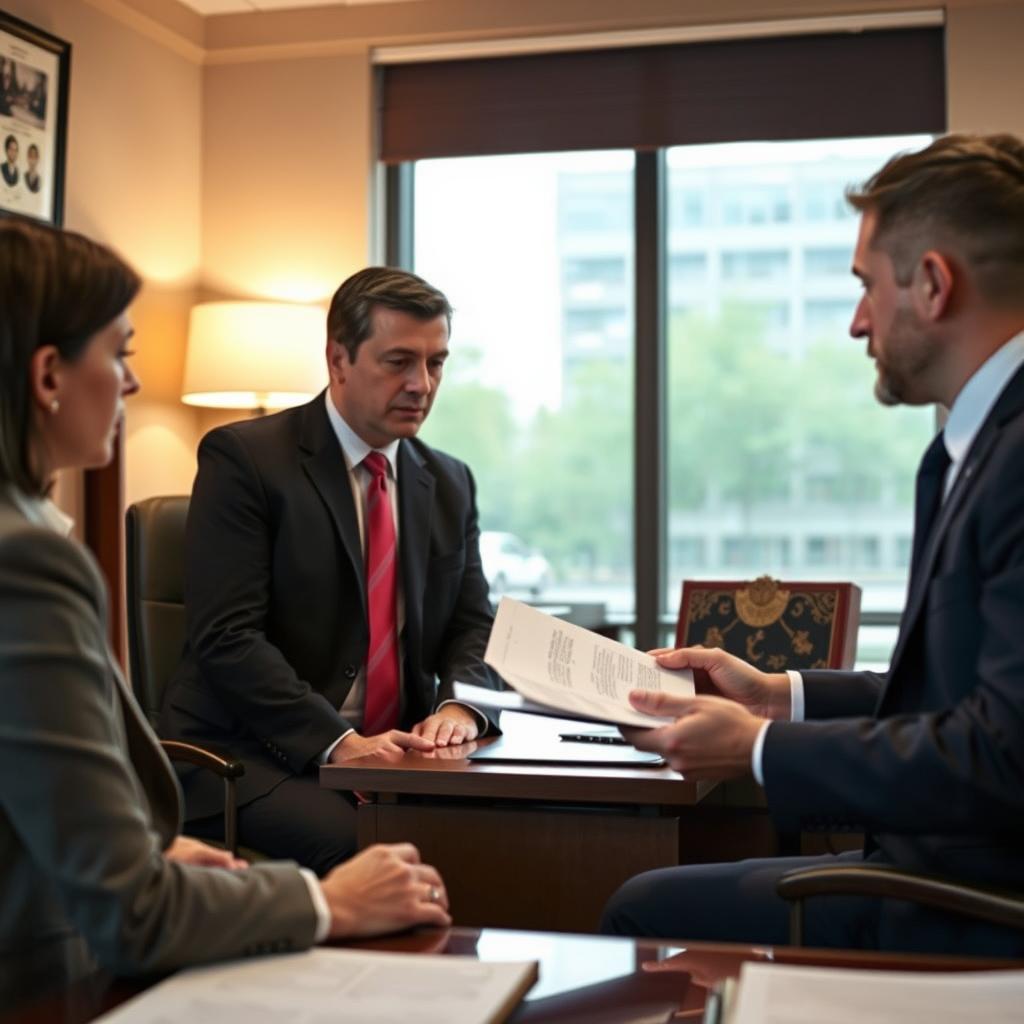
Fraud Defense Lawyer Navy Yard, DC
A fraud charge in the Navy Yard area of Washington, D.C., triggers a prosecution unlike any other in the country. Because the District is a federal territory, the United States Attorney’s Office for the District of Columbia—not a local district attorney—prosecutes local crimes under the D.C. Code in the D.C. Superior Court. When the charge involves allegations of false representations, deception, or improper gain, the case moves through a system that mixes federal prosecutorial resources with a local procedural framework. The consequences can be severe, yet many people facing an investigation or charge do not realize the case is already being built before they have had a chance to respond. Our firm’s Of Counsel attorneys understand the interplay between the U.S. Attorney’s Office, the Metropolitan Police Department, and the D.C. Superior Court Criminal Division, and they work to protect clients’ rights from the initial contact through resolution. To speak with us about a fraud matter in Navy Yard, contact our team at (888) 437-7747. Law Offices Of SRIS, P.C. – Advocacy Without Borders.
What Fraud Defense Means in Navy Yard, DC
Fraud offenses in the District are prosecuted under Title 22 of the D.C. Code and can range from misdemeanor-level false-pretenses cases to felony charges carrying substantial incarceration periods. The critical procedural context for any defendant is that the U.S. Attorney’s Office for D.C. Brings the case in the D.C. Superior Court, located at 500 Indiana Avenue NW. That court’s Criminal Division handles all local criminal matters, including fraud. Because the prosecution is federal while the charges proceed under a local code, the discovery and pre-trial practices can differ from what a person might expect in a neighboring state. Our firm’s location, serving the Navy Yard community from Arlington, Virginia, is just over 4.5 miles from the courthouse; our Of Counsel attorneys are thoroughly familiar with the prosecutors and judges who hear these cases.
For a resident of Navy Yard, the case will unfold at 500 Indiana Avenue NW, reachable via the Judiciary Square Metro station on the Red Line. The pretrial release process in D.C. Does not rely on cash bail; instead, the Pretrial Services Agency, a federal agency, assesses risk and recommends release conditions. Even before a first appearance, a thorough review of the charging documents and the alleged fraudulent scheme can shape the PSA assessment and the conditions the court imposes. Our Of Counsel attorneys evaluate whether the alleged false representation, the value involved, and the alleged intent support the charge as filed, because an overcharged case can affect everything from pretrial release to the ultimate exposure at trial.
How the Firm’s Of Counsel Attorneys Handle Fraud Defense Cases
When the firm becomes involved in a fraud matter, the first step is a full assessment of the prosecution’s case under D.C. Law. Because the U.S. Attorney’s Office for D.C. Has access to federal investigative resources—often including the Metropolitan Police Department or specialized federal agencies—the evidence may include financial records, electronic communications, and witness statements gathered well before an arrest. Our Of Counsel attorneys carefully examine the charging instrument, the statute cited, and the factual allegations to identify potential weaknesses: whether the alleged statements were actually false, whether the alleged victim reasonably relied on them, and whether the government can prove the requisite intent to defraud. Pre-indictment representation can sometimes prevent charges from being filed altogether.
If the case proceeds, our Of Counsel attorneys appear in the D.C. Superior Court Criminal Division for all hearings, including status conferences, preliminary hearings, and trial. They engage with the Assistant U.S. Attorney assigned to the matter, seek discovery, and file motions where appropriate—for example, to challenge the sufficiency of the evidence or to seek suppression of statements obtained in violation of the defendant’s rights. The firm works to achieve a favorable outcome, whether through negotiation of a charge reduction or alternative disposition, or through trial when the facts warrant it. Every case is prepared as if it will go to trial, because that posture leads to the strongest leverage in discussions with the prosecution.
About Mr. Sris and the Firm’s Of Counsel Attorneys
Mr. Sris, Owner and Founder of Law Offices Of SRIS, P.C., has practiced since 1997 and is a former prosecutor. That experience provides insight into how charging decisions are made and how the prosecution evaluates fraud allegations. Mr. Sris testified before the Virginia House Courts of Justice Committee in support of 2019 HB 635 (chief patron Del. David Bulova). He is admitted in Virginia, Maryland, the District of Columbia, New Jersey, and New York. His background includes handling complex criminal matters and understanding the financial dimensions that often underlie fraud cases.
The firm’s Of Counsel attorneys bring substantial criminal-defense experience in D.C. Courts. They have an in-depth understanding of the local procedural rules, the pretrial-services system, and the prosecutorial culture at the U.S. Attorney’s Office for the District of Columbia. The team works collectively to develop strategic defenses tailored to the unique nature of each fraud allegation. The firm has obtained favorable outcomes in D.C. Criminal matters, including a dismissal or not-guilty result in a documented case. Results may vary.
Frequently Asked Questions
Who prosecutes criminal cases in Washington, D.C.?
Criminal cases in the District are prosecuted by the United States Attorney’s Office for the District of Columbia, not by a local district attorney. D.C. Is a federal territory, and the USAO-DC handles all local crimes under the D.C. Code. Cases are heard in the D.C. Superior Court at 500 Indiana Avenue NW. This unique structure means federal prosecutors, with federal resources, bring charges that are governed by local ordinances and statutes, creating a dynamic that defense counsel must navigate with precision.
Does D.C. Use cash bail for fraud cases?
No, the District does not use traditional cash bail. Instead, the Pretrial Services Agency, a federal agency, conducts a risk assessment before the first appearance and recommends release conditions to the court. Most defendants are released on personal recognizance or under supervised conditions without posting money. For a fraud defendant, the PSA recommendation can be influenced by the nature of the allegations and the defendant’s ties to the community, making early preparation of a release plan important.
Can a fraud conviction be sealed or expunged in D.C.?
Yes, D.C. Law allows for sealing of certain criminal records, including for some convictions, after a waiting period. Under D.C. Code § 16-803, acquittals and dismissals may be sealed immediately, while qualifying convictions may become eligible after a set number of years. Fraud-related convictions are not automatically excluded, though eligibility depends on the specific offense and the individual’s record. An experienced attorney can evaluate whether sealing is available once the case is resolved.
What should I do if I am under investigation for fraud in Navy Yard?
If you suspect you are under investigation, do not speak with law enforcement or provide documents without counsel. Contact an attorney before answering questions. Early intervention allows the defense to assess the factual basis of the investigation and potentially present exculpatory evidence to the prosecutor before charges are filed. In D.C., the U.S. Attorney’s Office may conduct grand jury proceedings, so preserving evidence and identifying witnesses quickly can be critical.
What are the potential penalties for a fraud conviction in D.C.?
Penalties for fraud in the District vary widely depending on the value of the property or money involved and the specific statute charged. For example, a felony theft offense involving property valued at $1,000 or more can carry up to ten years’ incarceration, while a misdemeanor theft offense may result in up to 180 days. The sentencing judge has discretion and may consider restitution, community service, and other factors. An attorney can explain the exposure based on the exact charges.
Why is D.C. Prosecution different from federal court prosecution?
Although the U.S. Attorney’s Office prosecutes D.C. Code cases in D.C. Superior Court, those cases are distinct from federal cases brought in the U.S. District Court for D.C. A local fraud charge under Title 22 is prosecuted as a D.C. Offense, not as a federal crime. The procedures, sentencing guidelines, and potential penalties are governed by local law, not by the U.S. Sentencing Guidelines. Understanding this distinction is important for evaluating the potential consequences and for selecting appropriate defense strategies.
Authoritative Sources
For additional official information, consult these primary sources: D.C. Superior Court; United States Attorney’s Office for the District of Columbia; D.C. Code Title 22 (Criminal Offenses).
Attorney advertising. Prior results do not guarantee a similar outcome.
Results may vary.
Case results depend on a variety of factors unique to each case.