
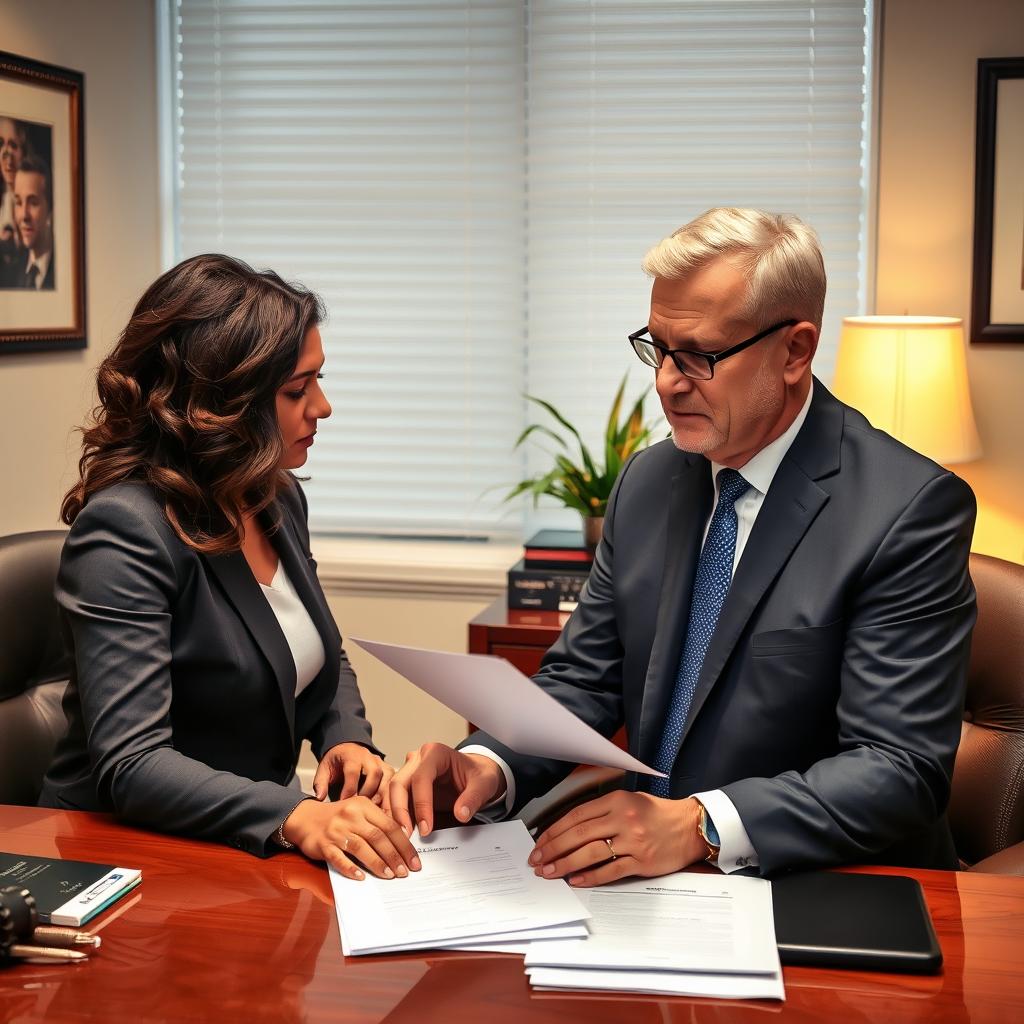
Abduction Lawyer Wesley Heights, DC
An abduction charge in the District of Columbia carries significant potential consequences, and the way these cases are prosecuted is unlike any other jurisdiction in the country. In DC, criminal cases—including abduction offenses under D.C. Code Title 22—are prosecuted by the United States Attorney’s Office for the District of Columbia, not a local district attorney. Cases are heard at DC Superior Court, located at 500 Indiana Avenue NW, just steps from Judiciary Square. For residents of Wesley Heights and the surrounding neighborhoods of Spring Valley, the Palisades, and Foxhall, having counsel who understands this unique federal-local hybrid system can make a meaningful difference in how a case proceeds. Mr. Sris, Owner and Founder of Law Offices Of SRIS, P.C., and the firm’s Of Counsel attorneys bring experience with criminal defense matters in DC Superior Court to every case they handle. To discuss your situation, contact the firm at (888) 437-7747. Law Offices Of SRIS, P.C. – Advocacy Without Borders.
What Criminal Abduction Means in Wesley Heights, DC
Abduction offenses in the District of Columbia are governed by D.C. Code Title 22, which sets out the criminal code for the District. Unlike Virginia or Maryland, where a local Commonwealth’s Attorney or State’s Attorney handles prosecution, DC felony and misdemeanor cases are prosecuted by Assistant United States Attorneys from the USAO-DC. This means that from the earliest stages of a case, the government brings federal-level resources and a highly structured prosecution approach. For someone facing an abduction charge in Wesley Heights, understanding this dynamic is critical.
DC Superior Court, located at 500 Indiana Avenue NW, handles all local criminal matters, including abduction, kidnapping, and related restraint offenses. The court sits at the Judiciary Square Metro station on the Red Line, making it accessible from Wesley Heights via a short drive down Massachusetts Avenue or through Rock Creek Park. The firm’s Arlington location serves clients throughout the District, including Wesley Heights, and Mr. Sris and the firm’s Of Counsel attorneys appear regularly in DC Superior Court. Because DC does not use a traditional cash bail system—instead relying on the Pretrial Services Agency to conduct risk assessments and recommend release conditions—the early moments of a case often move differently than in neighboring states. Having counsel who can engage with that process from the outset can affect the course of pretrial detention or release.
The neighborhoods around Wesley Heights—including portions of upper Northwest DC such as Spring Valley, American University Park, and the Palisades—share proximity to the court but may have residents who are unfamiliar with how DC’s criminal justice system operates. Abduction charges can arise from a range of circumstances, and the specific facts of each case shape the defense approach. Whether the matter involves allegations of restraint, removal, or detention, the government’s obligation to prove each element beyond a reasonable doubt remains constant. An attorney who practices in DC Superior Court regularly can evaluate the charges in light of how the USAO-DC typically approaches these cases.
How the Firm Handles Abduction Cases in DC
When the firm undertakes representation in an abduction matter, the process begins with a careful review of the charging document, the arrest affidavit, and any evidence the government has disclosed. Abduction cases often involve witness statements, electronic evidence such as text messages or location data, and sometimes surveillance footage. The firm works to examine that evidence for inconsistencies, procedural issues, and constitutional concerns that may affect the admissibility of the government’s case. Because DC is a jurisdiction where the United States Attorney’s Office prosecutes local crimes, federal evidentiary standards and practices often influence how discovery is handled.
The procedural path of an abduction case in DC Superior Court depends on whether the charge is filed as a misdemeanor or a felony. Misdemeanor matters are typically scheduled for arraignment promptly, while felony cases may proceed through a grand jury indictment process. Pretrial motions can address issues such as the legality of a stop, the validity of a search, the voluntariness of a statement, or the reliability of identification evidence. The firm’s Of Counsel attorneys have experience challenging complex evidence, including scientific and technical proof, which can be relevant when the government relies on forensic or electronic evidence. Throughout the process, the goal is to ensure that the client’s rights are asserted at each stage and that any weaknesses in the prosecution’s case are identified and raised.
About Mr. Sris and the Firm’s Of Counsel Attorneys
Mr. Sris, Owner and Founder of Law Offices Of SRIS, P.C., established the firm in 1997. A former prosecutor, he brings insight into how the government approaches criminal charging decisions and trial preparation. Mr. Sris is admitted to practice in Virginia, Maryland, the District of Columbia, New Jersey, and New York, and he has built a multi-state practice that represents clients in a range of criminal defense matters. He testified before the Virginia House Courts of Justice Committee in support of 2019 HB 635 (chief patron Del. David Bulova). His experience includes working with individuals facing serious felony charges, and he maintains a practice focused on achieving the trusted … Outcomes under the circumstances of each case.
The firm’s Of Counsel attorneys bring additional depth to criminal defense representation in DC Superior Court. These attorneys have experience in the District of Columbia’s court system and are familiar with how the USAO-DC approaches criminal prosecutions. The firm’s Of Counsel attorneys include practitioners with decades of trial experience and a history of handling complex felonies. Together, Mr. Sris and the firm’s Of Counsel attorneys work to provide representation that addresses both the legal and procedural aspects of an abduction charge. To schedule a consultation, call (888) 437-7747.
Frequently Asked Questions
Who prosecutes criminal cases in Washington, D.C.?
Criminal cases in the District of Columbia are prosecuted by the United States Attorney’s Office for the District of Columbia, not by a locally elected district attorney. DC is a federal district, and the USAO-DC handles the prosecution of both local D.C. Code offenses and federal crimes. This means that Assistant United States Attorneys—federal prosecutors—appear in DC Superior Court for cases including abduction, assault, theft, and drug offenses. The arrangement creates a distinctive dynamic in which the prosecution operates with federal resources and training. All local criminal matters are heard at DC Superior Court, located at 500 Indiana Avenue NW in downtown Washington. For someone facing an abduction charge, knowing that a federal prosecutor’s office is handling the case underscores the importance of having defense counsel who practices regularly in that court.
Does DC have cash bail for abduction charges?
No, the District of Columbia does not use a traditional cash bail system for criminal cases. Instead, DC relies on the Pretrial Services Agency, a federal agency that conducts risk assessments and makes release recommendations to the court. Most defendants in DC are released without having to post money, though conditions such as supervision, check-ins, or stay-away orders may be imposed. The PSA evaluates factors including community ties, prior criminal history, and the nature of the alleged offense. This system means that the pretrial release process in DC operates differently from neighboring Virginia and Maryland, where cash bail is more common. Having an attorney who can present relevant information to the court during the initial appearance can affect the conditions the court sets.
Can I get a DC criminal record sealed after an abduction case?
Yes, record sealing is available under D.C. Code § 16-803 for certain outcomes, including acquittals, dismissals, and some qualifying convictions after specified waiting periods. The eligibility for sealing depends on the disposition of the case and the nature of the offense. If charges are dismissed or the defendant is acquitted, sealing may be available sooner than for a conviction, which typically requires a waiting period before a petition can be filed. Certain serious offenses may not be eligible, and the court evaluates each petition individually. An attorney can advise whether a particular disposition qualifies for sealing and can assist with preparing and filing the petition in DC Superior Court. Changes to DC law in recent years have expanded eligibility for some offenses.
What should I do if I am facing an abduction charge in DC?
If you are facing an abduction charge in the District of Columbia, your first step should be to speak with a criminal defense attorney before making any statements to law enforcement. Anything you say to police or investigators can be used in the prosecution’s case. After contacting counsel, preserve any evidence that may be relevant—text messages, emails, location data, and witness contact information. Do not discuss the facts of the case with anyone other than your attorney. The USAO-DC moves quickly on felony charges, and the initial appearance in DC Superior Court often occurs within a day of arrest. Having an attorney prepared to appear at that hearing can affect the pretrial release conditions the court imposes.
How does a criminal defense lawyer approach an abduction case in DC Superior Court?
A defense lawyer handling an abduction case in DC Superior Court examines the government’s evidence for legal and factual weaknesses while building a defense tailored to the specific allegations. The attorney reviews the arrest affidavit, witness statements, any electronic evidence, and the charging document to identify constitutional issues—such as whether a search or seizure was lawful—and factual inconsistencies. The defense may investigate alternative explanations for the events, identify witnesses whose testimony supports the client’s account, and, where appropriate, negotiate with the Assistant United States Attorney regarding the charges. Because the USAO-DC prosecutes these cases, familiarity with how that office evaluates evidence and makes charging decisions can inform the defense strategy at each stage of the proceeding.
Do I need a lawyer for abduction charges in DC?
While you are not legally required to hire private counsel, having an experienced criminal defense attorney for an abduction charge in DC is a significant safeguard for your rights and your future. Abduction charges under D.C. Code Title 22 carry the possibility of incarceration, a permanent criminal record, and long-term consequences for employment, housing, and professional licensing. The USAO-DC brings substantial resources to its prosecutions, and navigating DC Superior Court without counsel places you at a considerable disadvantage. The court may appoint a public defender if you qualify financially, but you also have the right to retain private counsel of your choosing. Mr. Sris and the firm’s Of Counsel attorneys are available to discuss your case. For a consultation, contact the firm at (888) 437-7747.
Additional Practice Area Resources
If you are exploring criminal defense counsel in neighboring communities, the following pages may be helpful:
Washington, D.C. Criminal Defense Lawyer •
Criminal Lawyer Georgetown, DC •
Criminal Lawyer Spring Valley, DC •
Criminal Lawyer Cleveland Park, DC •
Criminal Lawyer Chevy Chase, DC
Outbound Primary-Source Authority
D.C. Code Title 22 — Criminal Offenses and Penalties •
DC Superior Court •
United States Attorney’s Office for the District of Columbia
Attorney advertising. Prior results do not guarantee a similar outcome.
Case results depend on a variety of factors unique to each case.