
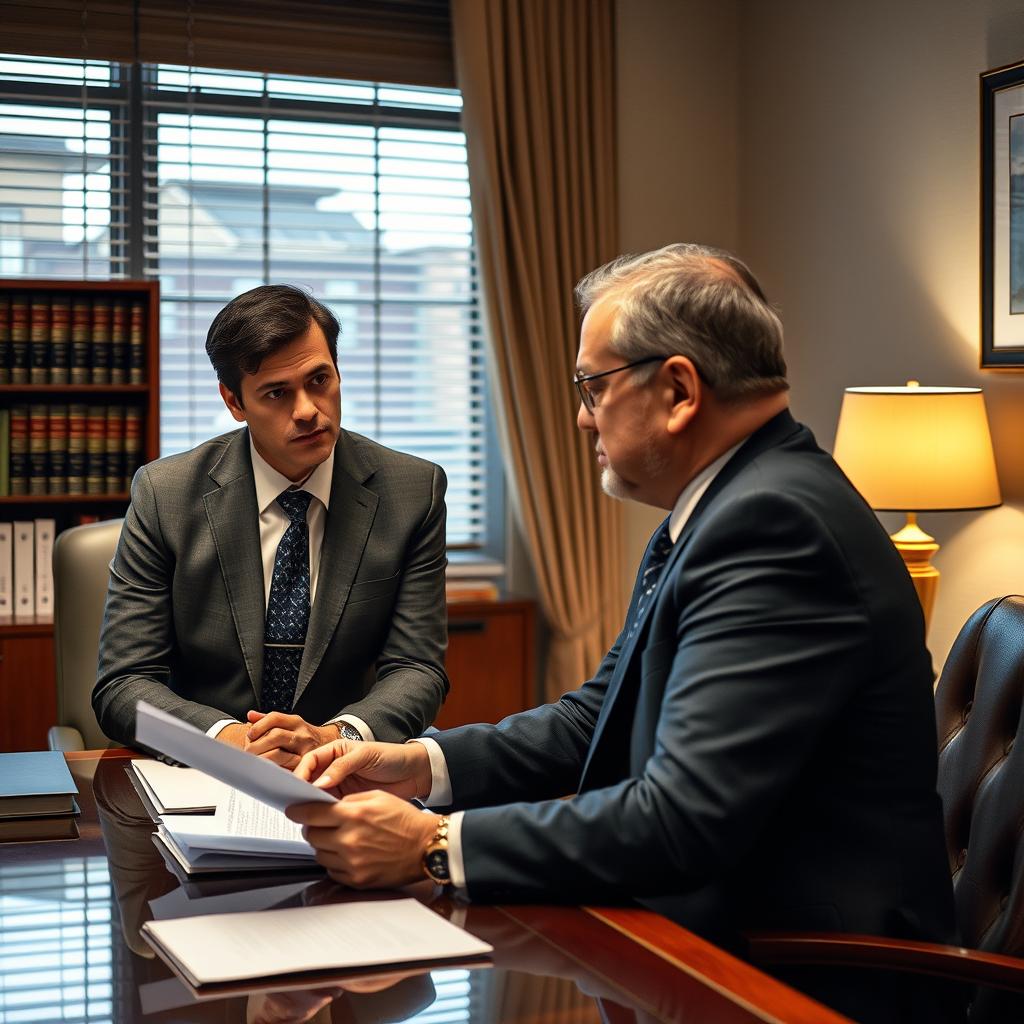
Armed Robbery Lawyer Washington DC
An armed robbery charge in Washington, D.C., brings an immediate confrontation with a unique criminal justice system — one where local crimes are prosecuted not by a district attorney but by the United States Attorney’s Office for the District of Columbia. Cases are heard at the DC Superior Court, 500 Indiana Avenue NW, near Judiciary Square. The pretrial release process is managed by the Pretrial Services Agency rather than traditional cash bail, and the Metropolitan Police Department conducts the investigation. Against this federal-local hybrid backdrop, Mr. Sris and his Of Counsel team at Law Offices Of SRIS, P.C. Concentrate on defending individuals charged under D.C. Code Title 22 in communities across the District, from Georgetown and Capitol Hill to Anacostia and Shaw. If you or someone close to you is facing an armed robbery allegation, reach Law Offices Of SRIS, P.C. at (888) 437-7747. Law Offices Of SRIS, P.C. – Advocacy Without Borders.
What Armed Robbery Means in Washington, D.C.
In Washington, D.C., armed robbery is a serious felony prosecuted under D.C. Code Title 22. The offense involves taking property from another person by force, intimidation, or the threat of force while armed with a dangerous weapon. Because D.C. Is a federal territory, the United States Attorney’s Office for DC — not a local prosecutor — brings charges. All criminal cases are filed in the Criminal Division of the DC Superior Court at 500 Indiana Avenue NW, a courthouse that sits steps from Judiciary Square Metro on the Red Line.
The District’s jurisdiction means that a person arrested for armed robbery moves through a process shaped by both local code and federal procedures. The Pretrial Services Agency, a federal agency, assesses risk and makes a release recommendation instead of relying on a money-bond system. The Metropolitan Police Department handles arrests, and the Public Defender Service for DC provides representation for those who cannot afford counsel. For neighborhoods throughout the District — including Dupont Circle, Adams Morgan, Columbia Heights, Logan Circle, Foggy Bottom, Navy Yard, Petworth, Brookland, Anacostia, Southwest Waterfront, Woodley Park, Cleveland Park, Spring Valley, Chevy Chase DC, American University Park, Wesley Heights, Bloomingdale, Tenleytown, Friendship Heights, Glover Park, Mount Pleasant, Shaw, Chinatown/Penn Quarter, NoMa, Ivy City, Eckington, Deanwood, Hillcrest, Congress Heights, Barracks Row, and Eastern Market — an armed robbery arrest triggers a case that proceeds through the DC Superior Court system.
The consequences of an armed robbery conviction are severe. A conviction can result in a lengthy period of incarceration, a permanent felony record, and long-term consequences for employment, housing, and professional licensing. Because the U.S. Attorney’s Office for DC is a federal prosecution office, it typically has significant resources and uses grand-jury indictment procedures. Securing experienced defense counsel early in the process — before the initial presentment or arraignment — can influence the direction of the case.
Mr. Sris and his Of Counsel are familiar with the procedures of the DC Superior Court and have represented clients in the Criminal Division. The team understands how the U.S. Attorney’s Office approaches armed robbery prosecutions and works to protect the rights of the accused at every stage.
How Mr. Sris and His Of Counsel Handle Armed Robbery Cases
When Mr. Sris and his Of Counsel take on an armed robbery defense in D.C., they begin with a thorough review of the government’s evidence — police reports, witness statements, surveillance footage, and forensic analysis. Because the Metropolitan Police Department and the U.S. Attorney’s Office build a case from the moment of arrest, the defense team moves quickly to identify potential weaknesses, such as unreliable eyewitness identifications, constitutional violations during search and seizure, or gaps in the chain of custody. The goal is to shape a strategy that either undercuts the prosecution’s proof at trial or raises reasonable doubt.
Pretrial advocacy is critical. The team appears at presentment, status hearings, and motions calendars to argue for conditions that allow the accused to remain out of custody while the case proceeds. Because the Pretrial Services Agency’s risk assessment plays a central role, the defense presents accurate information about the client’s ties to the community, employment, and other stabilizing factors. The court’s release decision is not based on cash bail, but the agency’s recommendation can still result in detention; experienced counsel prepares a strong release plan.
At trial and in plea negotiations, Mr. Sris and his Of Counsel draw on extensive combined legal experience between Mr. Sris and his Of Counsel. Results may vary. The team evaluates whether the government can prove every element beyond a reasonable doubt and explores whether the evidence supports a lesser-included offense or a disposition that avoids the most serious consequences. In the event a trial is necessary, the defense is prepared to cross-examine witnesses, challenge forensic reports, and present evidence on behalf of the accused.
About Mr. Sris and His Of Counsel Team
Mr. Sris, Owner and Founder of Law Offices Of SRIS, P.C., founded the firm in 1997. A former prosecutor, he has practiced criminal law for more than two decades and is admitted in Virginia, Maryland, the District of Columbia, New Jersey, and New York. His experience includes handling serious felony matters in multiple jurisdictions, and he has appeared in courts throughout the region. Mr. Sris testified before the Virginia House Courts of Justice Committee in support of 2019 HB 635 (chief patron Del. David Bulova).
Mr. Sris is joined by a team of Of Counsel lawyers, each with a robust background in criminal defense. The Of Counsel attorneys are admitted in the District of Columbia and are familiar with the practices of the D.C. Superior Court Criminal Division. Together, Mr. Sris and his Of Counsel bring extensive combined legal experience. They work collaboratively on armed robbery defense, provides clients with a thorough, well-prepared defense.
The firm serves all of Washington, D.C., from its Arlington, Virginia, location. To discuss your case, reach Law Offices Of SRIS, P.C. at (888) 437-7747.
Frequently Asked Questions
What should I do if I am arrested for armed robbery in Washington, D.C.?
If you are arrested for armed robbery in Washington, D.C., you should assert your right to remain silent and ask to speak with an attorney. Do not discuss the facts of the case with the police, even if you believe you can explain your way out of the situation. The U.S. Attorney’s Office evaluates every statement and may use it against you. Contact a defense lawyer as soon as possible. An attorney can be present during questioning and can begin working to challenge the government’s evidence. Time is critical because the Pretrial Services Agency will prepare a release recommendation soon after arrest, and your lawyer can present information that may support a favorable outcome.
How does the prosecution prove armed robbery in D.C.?
The prosecution must prove beyond a reasonable doubt that the defendant took property from another person by force, intimidation, or threat of force while armed with a dangerous weapon. The government relies on witness testimony, surveillance video, physical evidence, and sometimes forensic analysis. The U.S. Attorney’s Office must establish each element of the crime. A defense lawyer may challenge the reliability of eyewitness identifications, question whether the item used qualifies as a dangerous weapon under D.C. Law, or argue that the taking did not involve force. Every case is different, and the evidence must be examined closely.
What are the possible defenses to an armed robbery charge in D.C.?
Possible defenses to an armed robbery charge in Washington, D.C., include challenging the identification of the accused, showing that no force or threat was used, disputing the presence of a weapon, or establishing an alibi. Other defenses may involve constitutional violations, such as an unlawful search or seizure, that could lead to the suppression of evidence. A defense attorney will also examine whether the government’s witnesses are credible and whether any statements were obtained in violation of Miranda rights. The appropriate defense depends on the specific facts of the case.
Does D.C. Have cash bail for armed robbery cases?
No, Washington, D.C., does not use a traditional cash bail system; instead, the Pretrial Services Agency conducts a risk assessment and makes a release recommendation to the court. The judge then decides whether the accused will be released pending trial and under what conditions, such as supervision or electronic monitoring. Because there is no predetermined bail amount, the release decision often turns on the defendant’s community ties, criminal history, and the severity of the current charge. An experienced defense lawyer can present information to the court that supports a strong release plan.
Can I get my criminal record sealed after an armed robbery arrest in D.C.?
If the armed robbery charge results in an acquittal, dismissal, or nolle prosequi, you may be eligible to have the record sealed under D.C. Code § 16-803. Eligibility depends on the final disposition of the case and whether you have other convictions. Certain waiting periods and procedural requirements apply. If you are convicted of armed robbery, sealing may not be available, but you may still explore other post-conviction relief options. A lawyer can review your case and advise you on the possibility of record sealing under the current D.C. Law.
How long does an armed robbery case take in D.C. Superior Court?
The timeline of an armed robbery case in D.C. Superior Court varies significantly depending on the complexity of the case, the number of witnesses, and the court’s calendar. Misdemeanor matters may resolve more quickly, but felony cases such as armed robbery often involve grand jury proceedings, motions practice, and extensive discovery. Some cases are resolved through plea negotiation in a matter of months; others proceed to trial over a year or longer. The Speedy Trial Act considerations may also influence scheduling. Your attorney can provide a more specific estimate once the court has set a schedule.
Serving neighborhoods across the District of Columbia: Georgetown Criminal Defense | Spring Valley Criminal Defense | Cleveland Park Criminal Defense | Chevy Chase Criminal Defense | American University Park Criminal Defense
Attorney advertising. Prior results do not guarantee a similar outcome. Results may vary. Case results depend on a variety of factors unique to each case.