
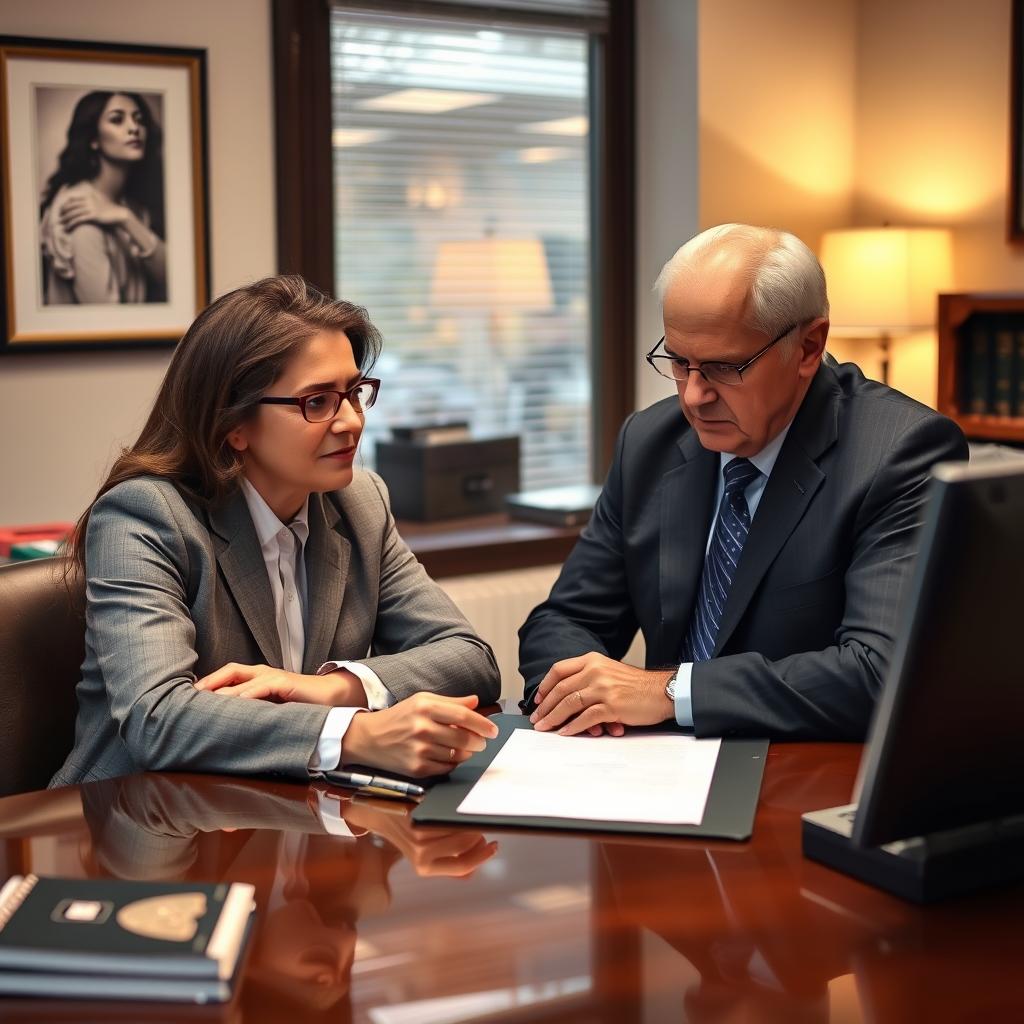
Forgery Defense Lawyer Spring Valley, DC
Forgery accusations in Spring Valley, a residential neighborhood in northwest Washington, D.C., can arise from a variety of circumstances, such as the alleged alteration of a check, a signature on a legal document, or the creation of a false identification. DC criminal charges involving forgery are prosecuted not by a local district attorney but by the United States Attorney’s Office for the District of Columbia. Cases are heard at the DC Superior Court, located at 500 Indiana Avenue NW, within the Judiciary Square area accessible from Spring Valley by car or Metro. A conviction for forgery can carry serious consequences, including incarceration, a permanent criminal record, and long-term effects on employment and professional licensing. Mr. Sris and the firm’s Of Counsel attorneys represent individuals facing forgery allegations in Spring Valley and throughout the city, drawing on extensive combined legal experience to challenge the prosecution’s case at every stage. Reach Law Offices Of SRIS, P.C. at (888) 437-7747 to request a consultation.
Law Offices Of SRIS, P.C. – Advocacy Without Borders.
What Forgery Defense Means in Spring Valley
Forgery in the District of Columbia is defined under the D.C. Code and generally involves the act of falsely making, completing, or altering a written instrument with the intent to defraud or deceive another person. The offense can relate to checks, contracts, wills, credit cards, identification documents, or any instrument that has legal significance. Because theft and fraud crimes in Spring Valley are prosecuted by the U.S. Attorney’s Office for DC at the DC Superior Court, a person accused of forgery faces a unique hybrid of local criminal code enforcement carried out by federal prosecutors. The criminal division of the DC Superior Court handles all forgery matters, from initial presentment through trial or negotiated resolution. The court is located at 500 Indiana Avenue NW, a short distance from the Judiciary Square Metro station and within the unified DC court system that also encompasses civil, family, and domestic violence divisions. A forgery charge in Spring Valley follows the standard DC criminal procedure: after arrest, the defendant is brought before a judicial officer, the Pretrial Services Agency conducts a risk assessment, and a hearing date is set. The agency, a federal entity, may recommend conditions of release without the use of cash bail.
Spring Valley’s proximity to the courthouse and the concentration of government, legal, and financial institutions in the District of Columbia means that many forgery cases involve documentation that crosses multiple agencies or institutions. An attorney who concentrates in criminal defense in the District will examine whether the evidence demonstrates the specific intent required to prove forgery, whether the document qualifies as a “written instrument” under the applicable D.C. Statute, and whether any procedural deficiencies exist in the investigation or charging process. Mr. Sris and the firm’s Of Counsel attorneys evaluate each forgery case from the perspective of how the government’s case would be presented at trial and what defenses may be available under the law and the facts.
How Mr. Sris and the Firm’s Of Counsel Attorneys Handle Criminal Cases
When Law Offices Of SRIS, P.C. Undertakes a forgery defense in Spring Valley, the immediate goal is to ensure the client understands the charge, the potential penalties, and the procedural steps ahead. The firm’s attorneys review the charging document, the arrest report, and any documentary evidence the government intends to introduce, including the alleged forged instrument, handwriting analyses, and financial records. Early investigation can uncover errors in the government’s case: a mistakenly attributed signature, a document that does not meet the statutory definition of a written instrument, or a lack of the requisite intent to defraud. The firm identifies weaknesses in the government’s case and communicates with the prosecutor to explore the possibility of a dismissal, a reduction of the charge, or an agreement to resolve the matter under terms that minimize long-term consequences.
Should the case proceed to trial, the firm’s approach emphasizes a thorough challenge to the prosecution’s evidence. In a forgery case, that often means examining the authenticity of the signature or document at issue, cross-examining handwriting attorneys, and presenting countervailing testimony about the client’s authority to sign or alter the writing. Because DC does not use cash bail and the Pretrial Services Agency makes release recommendations, the firm also addresses any conditions of pretrial supervision, working to ensure that clients can continue their daily responsibilities while the case is pending. Throughout the process, Mr. Sris and the firm’s Of Counsel attorneys maintain open communication with the client, explaining developments and potential outcomes in plain terms. The timeline of a case depends on the court’s calendar and the complexity of the evidence; no two matters are resolved in exactly the same way, and the firm focuses on the preparation that puts the client in the strong $1 regardless of how the case proceeds.
About Mr. Sris and the Firm’s Of Counsel Attorneys
Mr. Sris, Owner and Founder of Law Offices Of SRIS, P.C., is a former prosecutor who has practiced criminal defense since founding the firm in 1997. Admitted in Virginia, Maryland, the District of Columbia, New Jersey, and New York, Mr. Sris brings a multi-state perspective to every DC criminal matter. His prosecutorial experience gives him insight into how the government builds a forgery case, including the evidentiary standards and trial strategies that prosecutors employ. Mr. Sris testified before the Virginia House Courts of Justice Committee in support of 2019 HB 635 (chief patron Del. David Bulova).
The firm’s Of Counsel attorneys contribute extensive combined legal experience in criminal law, collaborating with Mr. Sris on case analysis, motion practice, and trial preparation. Together, Mr. Sris and the firm’s Of Counsel attorneys appear in DC Superior Court and handle forgery charges in Spring Valley and throughout the District. Results may vary. in any given matter.
Frequently Asked Questions
What constitutes forgery under Washington, D.C. Law?
Forgery in the District of Columbia is generally defined as the act of falsely making, completing, or altering a written instrument with the specific intent to defraud another person. The “written instrument” can be a check, a contract, a will, an identification card, or any document that has legal significance. The government must prove beyond a reasonable doubt that the accused acted with the purpose of deceiving someone and that the document was capable of being used to cause a financial or legal injury. The U.S. Attorney’s Office for DC prosecutes forgery charges at the DC Superior Court, and any person facing such a charge should speak with an experienced defense attorney to understand how the law applies to the particular facts of their case.
What are the possible penalties for a forgery conviction in Washington, D.C.?
Penalties for forgery in DC depend on the value of the property or the nature of the document involved, and a conviction can result in incarceration, fines, probation, and a permanent criminal record. Felony forgery offenses, generally those involving a document that is part of an issue of money, securities, postage, or revenue stamps, or any instrument affecting legal rights, can carry a sentence of up to ten years. Misdemeanor forgery, such as the false making of a private document with a value below the felony threshold, is punishable by up to 180 days in jail. The final sentence is determined by the judge after considering the facts of the case and the defendant’s criminal history. Because the impact of a forgery conviction extends beyond the courtroom—affecting employment, professional licenses, and housing opportunities—anyone charged should consult an attorney promptly.
How does a forgery case proceed in the DC Superior Court?
A forgery case in DC begins with an arrest and presentment before a judicial officer, followed by a status hearing schedule and eventual trial or negotiated resolution at the DC Superior Court. After arrest, the defendant appears before a judge, the Pretrial Services Agency conducts a risk assessment and recommends release conditions, and a status hearing is set. The U.S. Attorney’s Office has the burden of proving the charge beyond a reasonable doubt. The defense may file motions to suppress evidence, challenge the admissibility of documents, or negotiate with the prosecutor for a dismissal or reduction. If the case does not resolve, it proceeds to trial before a judge or jury at the courthouse located at 500 Indiana Avenue NW in Washington, D.C. The timeline for a forgery case depends on the complexity of the evidence and the court’s scheduling; no two cases follow an identical path.
Can forgery charges be reduced or dismissed in Washington, D.C.?
Yes, forgery charges can be reduced or dismissed in DC through negotiation with the prosecutor, pretrial motions, or by demonstrating weaknesses in the government’s evidence. The U.S. Attorney’s Office for DC has prosecutorial discretion and may agree to reduce a felony forgery charge to a misdemeanor, or to dismiss the case outright, if the evidence of specific intent is weak, if the alleged document does not meet the statutory definition of a “written instrument,” or if procedural errors occurred during the investigation. A defense attorney can also file a motion to dismiss for lack of probable cause or to suppress evidence obtained in violation of the Fourth Amendment. Each outcome depends on the specific facts of the case; an early conference with counsel is the most effective way to evaluate the likelihood of a favorable resolution.
Do I need a lawyer if I’ve been accused of forgery in Spring Valley?
Yes, anyone accused of forgery in Spring Valley should retain experienced legal counsel immediately because the consequences of a conviction can be severe and long-lasting. A forgery conviction in DC can result in incarceration, a permanent criminal record, and collateral effects on employment, security clearance, and professional licensing. An attorney concentrates on identifying the strengths and weaknesses of the prosecution’s case, negotiating with the U.S. Attorney’s Office, and preparing a defense. Even if you believe the situation will resolve on its own, it seldom does; speaking with a lawyer early improves the chances of a favorable outcome. Reach Law Offices Of SRIS, P.C. at (888) 437-7747 to discuss your situation and learn about your options.
How can an attorney help with a forgery defense in DC?
An attorney helps a forgery defendant in DC by challenging the prosecution’s evidence, building a defense theory, and navigating the procedural complexities of the Superior Court. In a forgery case, an attorney will review every document the government intends to use, retain handwriting examiners if needed, and question whether the accused acted with the required intent to defraud. The attorney also communicates with the prosecutor about the possibility of a dismissal or a charge reduction, and prepares the case for trial if a satisfactory resolution cannot be reached. Because DC’s court system operates differently from many states—federal prosecutors handle local crimes, and the Pretrial Services Agency manages release—a lawyer familiar with these unique aspects can provide counsel that is fully informed by local practice.
Related pages:
Criminal defense in Washington, D.C.
· Georgetown criminal lawyer
· Cleveland Park criminal lawyer
· Chevy Chase DC criminal lawyer
· American University Park criminal lawyer
Primary Sources
D.C. Code
· D.C. Superior Court
Attorney advertising. Prior results do not guarantee a similar outcome. Results may vary.
Case results depend on a variety of factors unique to each case.